
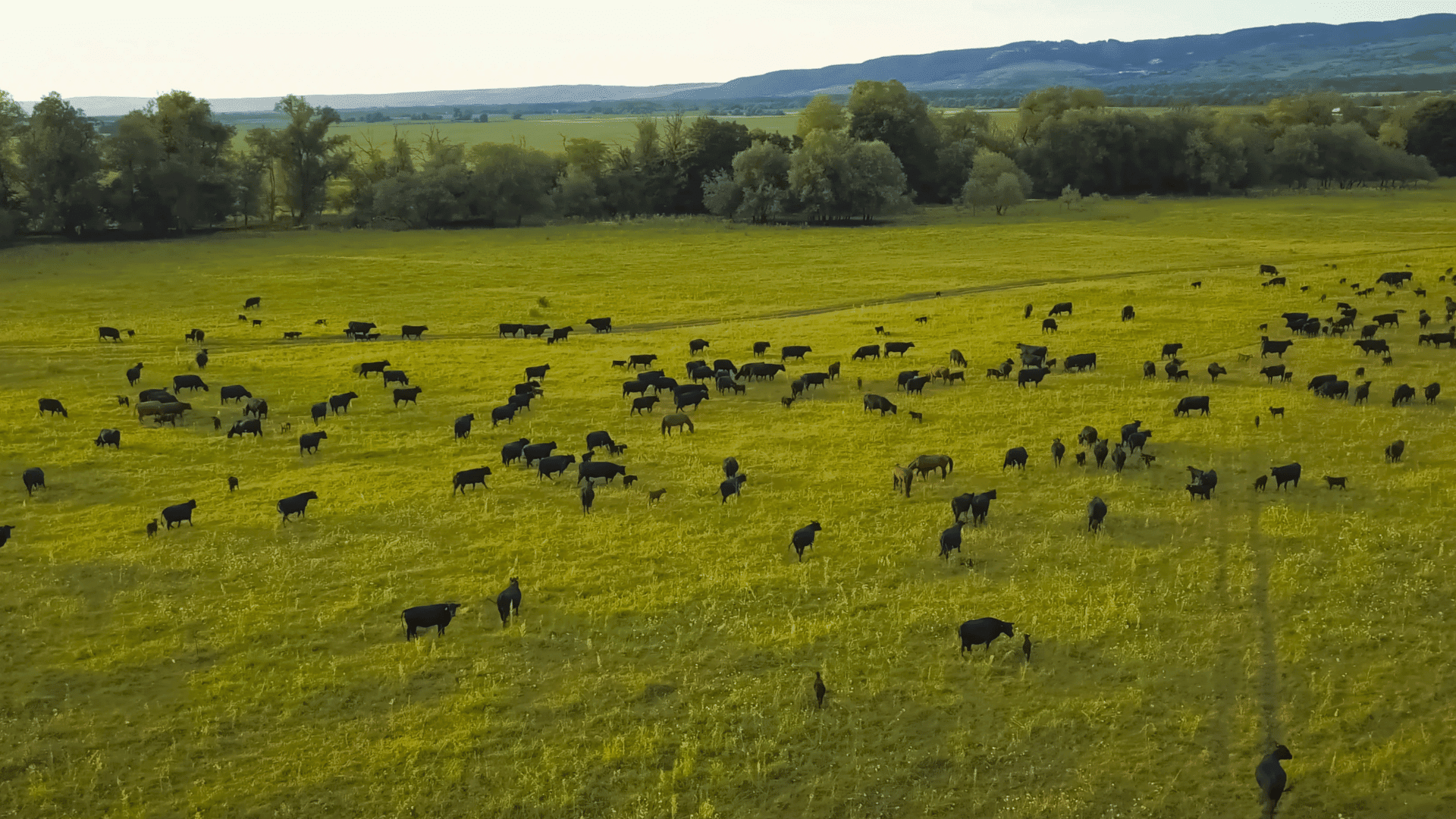
There are about 24,000 cattle living on the site of Australia’s largest proposed data centre.
The Western Downs Digital Park is a $31.9 billion proposal on 725.5 hectares of the Darling Downs, 37 kilometres out of Dalby and around 250 kilometres north-west of Brisbane. The land is a feedlot owned by the Wambo Cattle Company. The developer is Zerra DC, a Singapore group that runs hyperscale sites across the Asia Pacific and which, until a fortnight ago, almost nobody in Brisbane had heard of.
Given the name of this blog, I feel contractually obliged to notice the cattle. But the interesting question is underneath them.
Why there?
The answers that don’t survive contact
Cheap land is the first answer everyone reaches for, and it doesn’t survive. Seven hundred hectares of grazing country is a rounding error against $31.9 billion. If land were the binding constraint, you would see these things scattered across every cheap paddock between here and Charleville, and you don’t.
Cheap gas is the second answer, and it’s the one I would have given a year ago. That one doesn’t survive either, at least not in its simple form. Queensland sits on an enormous gas resource, and Queensland does not have cheap gas. Three LNG plants at Gladstone tie the domestic price to the international one. Abundance and cheapness are different things, which is a problem this state has had before with other commodities and which I’ve discussed before in the context of mineral processing. It deserves its own post, but not today.
What is scarce
A third answer lies in the map rather than the balance sheet. The site sits next door to the Braemar and Darling Downs power stations, both gas-fired, in country that already carries gas fields, gas infrastructure, and transmission. The Western Downs mayor calls his region the energy capital of Queensland, and says that if more energy infrastructure needs to build, bring it on.
What he is selling is not gas. It’s a shorter queue for production.
Here is the mismatch that governs everything downstream, and the IEA states it plainly in its own work: a data centre can be running in two or three years, while the energy system around it needs far longer to plan and build. A major transmission line takes closer to a decade. A nuclear plant takes longer again, which is part of why I keep coming back to small modular reactors as a 2030s answer rather than a 2020s one.
When those two schedules diverge, the scarce input stops being the fuel and becomes the connection. Turbines have order books. Transformers have order books. Connection studies have queues, and so do approvals. AEMO has just rebuilt its own data centre forecasting method to allow for project attrition during the connection process; the market operator conceding, in a footnote, that the queue is full of things that will never be built. What a developer is short of is not gigajoules. It’s years.
The industry has a term for this: Speed to power. It’s the time between signing the land and energising the first rack. Right now, it’s the most valuable characteristic a site can have. A paddock beside two working power stations and a live gas network has more speed to power than a serviced industrial estate an hour from the CBD. That advantage is worth more than any saving on land or fuel.
And nobody next door
The site has a second asset, and it’s easy to miss because it’s an absence.
Nobody lives there.
A data centre running a bank’s core systems has to be near the bank. A data centre training models, running batch inference, generating synthetic data or grinding through scientific simulation does not have to be near anyone at all. Those workloads will absorb tens of milliseconds without noticing. And once a workload stops caring where it lives, the last thing tethering the building to a population centre lets go.
I argued in The disappearing data centre that the backlash against AI infrastructure would run out of target, because the target was about to become smaller, scattered, and dull. This is where it went. Not smaller, but further away.
Out of sight is not the same as unopposed, and I should be honest about that. Toowoomba’s council has already moved to keep data centres clear of its drinking water. The Commonwealth is writing national standards on data centre energy and water use, Queensland is opposing them, and legislation is coming. Air cooling helps the applicant here: normal operating draw is around 16.5 kilolitres a day (roughly twenty households) and part of that is meant to come from coal seam gas produced water, which is to say the gas industry’s leftovers. Whether the district wears it is a live question. But the argument is happening 250 kilometres from where most of the votes are, and that is not an accident either.

The exponent, not the level
Everybody arguing about AI and energy is arguing about a level. AEMO has data centre consumption in the national market going from about 5 TWh now to 34 TWh by 2035-36, lifting from around 3 per cent of what the grid delivers to roughly 13 per cent. The IEA has global data centre consumption doubling to about 945 TWh by 2030.
Then look at what the IEA does with its own scenarios. Electricity generated to supply data centres in 2035: about 790 TWh if AI adoption disappoints, roughly 1,100 if efficiency runs hard, and close to 2,000 in the high case. Same starting point, same decade, two and a half times the answer.
As a mathematician, I find the level the least informative number in any of them. They are the same curve with slightly different exponents and over a decade; a small difference in an exponent can compound into an enormous difference in a level. Arguing about the level is arguing about the output of an assumption nobody examined.
The better question is whether the exponent holds, and if it does, what breaks first.
I think it holds. Efficiency has never reduced total consumption of anything that was useful and then got cheaper. It didn’t for coal, it didn’t for bandwidth, and cheaper intelligence looks to me like it produces more appetite for intelligence rather than less. That is my own reading rather than a forecast, and everything after depends on it, so it’s worth saying plainly that I could be wrong.
If it holds, what breaks is not the gas. Australia has gas. Nor is the grid in crisis: AEMO’s outlook actually improved this year, with no reliability gaps forecast before 2030, on the back of a record 9.1 GW of new generation and storage connected in 2025-26, and a 40 GW pipeline.
What’s under pressure is the calendar. Around 15 GW of coal and gas retires across the national market over the next decade while electricity consumption rises more than 40 per cent. Every replacement megawatt must find a queue, a turbine, and an approval before it finds a customer.
The IEA says the same thing from the other end. In its high case, long connection queues mean most of the additional demand ends up served by fossil fuels. Not because anyone chose them, but because they were already connected. Which is exactly what makes a paddock beside two working gas plants worth somebody’s attention. Especially $31.9 billion of their attention.
Then location becomes the adjustment
That brings the third order into view. If you cannot move energy to the compute fast enough, you begin moving the compute to the energy.
It’s a strange thing to say about an industry that has always sat near its customers, its capital and its fibre. But a large slice of this workload doesn’t need proximity, and speed to power is the one thing an energy region can supply that a city cannot.
The Western Downs hub is that trade being put on early. A Singapore developer looked at a world map and placed its largest Australian bet inland, on a feedlot beside two gas-fired power stations. Whether this particular project reaches its proposed scale is another question, considering that a great many announced data centres never get built. The location tells you what the developer thinks is scarce, and that information is free.
There’s a larger argument sitting behind it. If compute travels to energy, an energy exporter eventually gets a choice about whether to export the energy or the thing manufactured from it. For the first time in Australia’s economic history, the downstream processing argument doesn’t die on freight, because intelligence weighs nothing. There’s a lot more to unpack with this in the next post.
Why an angel should care
The edge is never in the first-order fact, because everyone has it.
First order: AI needs electricity. That’s in the price of every listed energy business on earth and it has been for two years.
Second order: the constraint migrates from fuel to build rate. Fewer people hold this one, and it’s why a position in a connection queue has become an asset.
Third order: location becomes the adjustment mechanism, and speed to power starts redrawing the map. That’s the Western Downs hub.
The fourth order is the one I’m most interested in, and it’s about which companies get built once compute goes and sits in a gas field 250 kilometres from anywhere. Microgrids. Cooling without water. Connection engineering. Workload scheduling against a spot price. Those are the deals that reach an angel’s desk, and are worthy of a separate discussion in an upcoming post.
The further down that ladder you go, the fewer people are standing there. That’s the attraction, and it’s also the catch, because each step is built on the one above it, and my errors compound at the same rate as my edge does. The fourth order is only worth anything if I have the first three roughly right, and there’s always the chance I might not.
Which is the honest reason I read a development application for a cattle feedlot outside Dalby with more attention than I gave most of the pitch decks that crossed my desk last month. Not because I know how it ends. Because the location of that feedlot is somebody with $31.9 billion telling me what they think is scarce, and that information is free.
Richard Moore is co-founder of MooCoo Ventures, an angel syndicate that co-invests alongside Brisbane Angels, one of Australia’s most active angel groups. He has made over ninety personal angel investments since 2013.
moocoo.vc
DISCLAIMER: The information provided is for general informational and educational purposes only and should not be construed as financial, investment, or legal advice. Any decisions you make based on this information are your sole responsibility. You should consult with a qualified financial advisor or other professional before making any financial decisions. Past performance does not guarantee future results.