
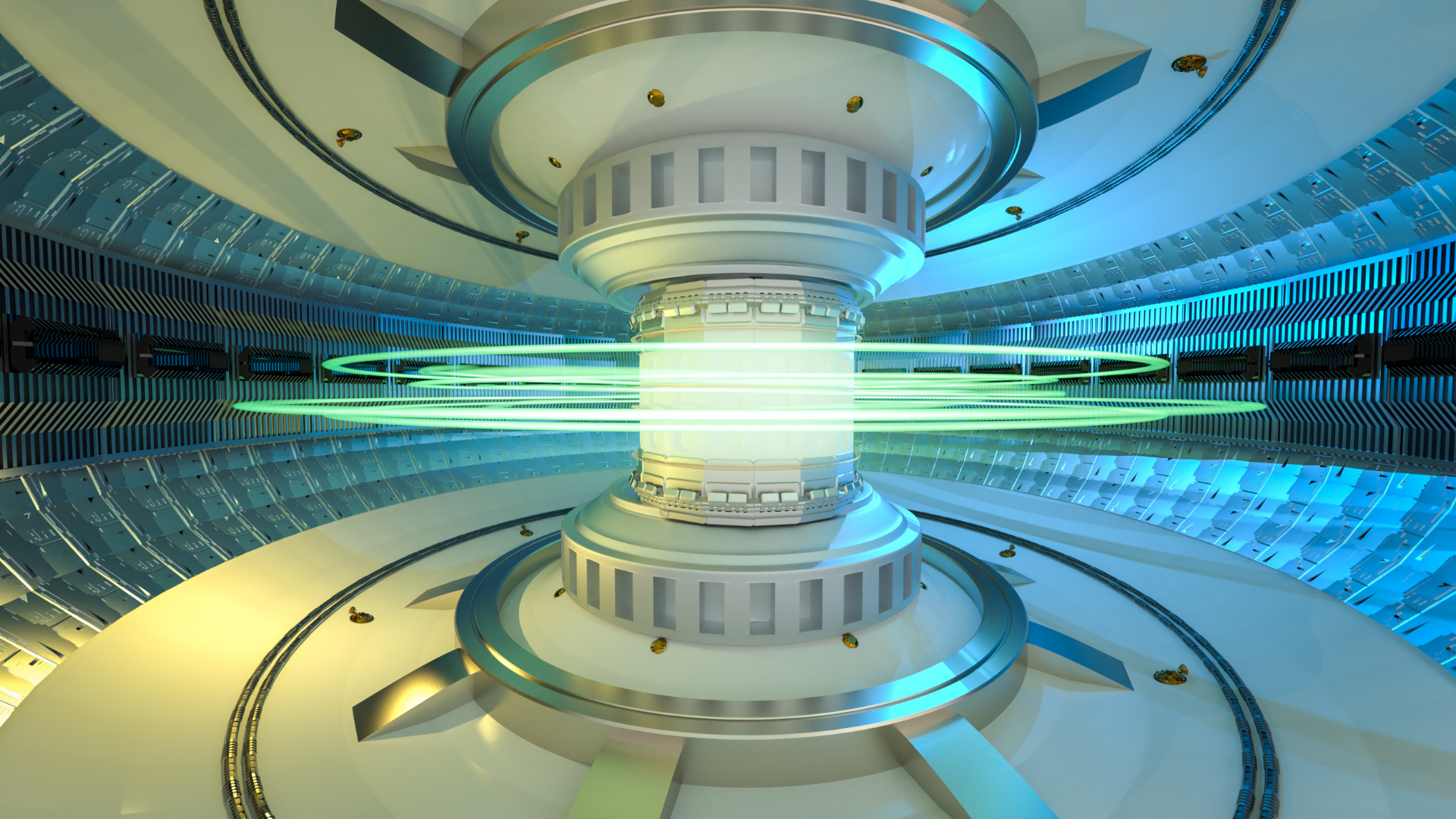
I was on my morning walk, the usual 8–10 kilometres, podcast in my ears, when the episode made me stop on the footpath. I literally stopped in my tracks. Erin Price-Wright and Erik Torenberg from a16z were talking with Doug Bernauer of Radiant and Drew Baglino of Heron about rebuilding American energy infrastructure. The detail that arrested me was this: Radiant is building a nuclear reactor that fits inside a standard shipping container.
I double-checked that they weren’t discussing a rendering on a slide deck. Nope. An actual reactor, the Kaleidos, assembled, fuelled, and tested in a factory, lowered off a truck, achieving full power the next day. It runs for 5+ years. It requires no water, no site excavation, and no on-site waste. When the fuel is spent, the container ships back for refuelling. Radiant is building its factory at Oak Ridge, Tennessee, on a Manhattan Project site, targeting 50 reactors a year. One per week. Cost-competitive with diesel at around US$6 a gallon. Once the proof of concept is established, the global demand for diesel replacement alone will require hundreds of factories like it.
Sceptics will say small modular nuclear has been promised before. Fair enough. But Bernauer is a former SpaceX engineer who was designing energy systems for Mars before realising the same problem existed on Earth. Baglino spent 17 years at Tesla, rising to SVP of Powertrain and Energy, where he led the 4680 battery cell and a 50 GWh factory in Texas. These are Elon alumni. Companies that land rockets and build gigafactories tend to produce people who deliver what sceptics say is impossible. Baglino’s company, Heron, builds the complementary technology: solid-state transformers that replace century-old grid infrastructure. Radiant generates power and Heron delivers it. The podcast made a sharp point: delivery, not generation, is the real bottleneck. As Warren Buffett has observed, never bet against America. This is a microcosm of the best of it.
I stood on a suburban Brisbane footpath, thinking about diesel.
The diesel country
The timing was pointed. Australia is in the grip of a fuel crisis that has exposed a vulnerability most Australians preferred not to think about. The closure of the Strait of Hormuz following the Iran war has sent oil prices surging. Australia imports roughly 90% of its liquid fuel. It has 2 operational refineries. The diesel that powers its farms, its mines, its road trains, and its regional communities is refined in South Korea, Japan, and Singapore from crude that recently flowed through Hormuz. Petrol has jumped 50 cents a litre in 8 weeks. Regional stations have run dry. The government has cut the fuel excise, relaxed fuel quality standards, and convened a National Fuel Security Plan.
Mining alone consumes 35% of Australia’s annual diesel. Some junior miners reported having 5 days’ supply during the March crisis. And Australia is vast. Electrification will take decades. Diesel will remain the workhorse for agriculture, mining, heavy transport, and outback communities for a long time. The Iran war did not create this vulnerability, but it certainly exposed it.
The podcast mentioned use cases for micro nuclear: remote communities, military bases, data centres, and island grids like Hawaii, all which are dependent on shipped diesel. The structural problem is identical to outback Australia. A single Kaleidos unit would power a remote mining camp or a regional community, replacing diesel generators that are now eye-wateringly expensive and intermittently unavailable.
The answer seemed almost offensively obvious. And it resonated deeply because of something personal.
The enrichment play
A few years ago, I did some capital-raising work for a company called Ubaryon. Ubaryon is a Brisbane Angels portfolio company that has discovered a new chemical process to enrich uranium.
The story is worth telling. Ubaryon was established in 2015 after environmental testing on an Australian uranium mine – work related to cleaning up mining tailings – identified a process anomaly. The team was not looking for a way to enrich uranium. They stumbled onto it. Originally based in northern New South Wales, the company is now at Lucas Heights, home to Australia’s nuclear research facilities. The Australian Safeguards and Non-Proliferation Office classified the intellectual property in 2018, and Defence Export Controls now regulate all technical disclosure. By accident, the technology had entered one of the most sensitive domains in the world: uranium enrichment, governed by the Nuclear Non-Proliferation Treaty.
I cannot tell you how the physics works. The technology is classified, and as the person raising capital rather than building the science, I did not need to know, but I can tell you why it matters. Conventional enrichment requires converting uranium oxide into gaseous uranium hexafluoride, spinning it through centrifuges, then converting it back. Those conversion steps are expensive and technically demanding. Ubaryon’s process eliminates them entirely, working directly with uranium oxide. If it scales, it could halve the capital and operating costs of enrichment.
The market context really puts the math into perspective. Global enrichment is a US$14 billion industry heading toward US$22 billion by 2030, and could double again by mid-century. Each expansion costs billions. Orano’s current 30% capacity increase at Georges Besse II in France is running at €1.7 billion, and that is not a new plant. There is, in effect, one Western centrifuge technology platform: Orano’s French plant uses centrifuges supplied through a 50/50 joint venture with Urenco. Russia and China controlled 62% of global capacity as recently as 2024. Western nations are scrambling to de-risk.
The capital I raised for Ubaryon was at an A$5 million valuation. You do the math.

I introduced Ubaryon to every potential end acquirer and licensee globally. That work paid off. In mid-2025, Urenco, the dominant Western enrichment company (government-owned, facilities in 4 countries, 50+ customers in 20, and critically the only enricher with US production) invested A$5 million for a 13% stake, with the option to acquire the whole company. When Urenco takes an option to buy, you know it’s not a speculative punt, it’s strategic validation from the most important player in Western enrichment.
Some information about Ubaryon is in the public domain because an ASX-listed company, Global Uranium and Enrichment (GUE), held a cornerstone 22% investment. GUE has since been acquired by Frontier Nuclear and Minerals Inc., a NASDAQ-listed US nuclear fuel cycle company. The technology’s largest shareholder pathway now runs through America.
Good for shareholders. But I confess to ambivalence. Because what I may be watching is another instance of Australia’s most persistent habit: developing world-class technology and losing it overseas. The Wi-Fi comparison is imperfect but directionally correct.
The absurdity
Australia sits on the world’s largest known recoverable uranium resources. Olympic Dam in South Australia is the single largest uranium deposit on the planet. The country mines the stuff, exports the stuff, and bans the use of nuclear power on its own soil. Multiple states ban even uranium exploration. The policy is the product of decades of political compromise and a comfortable assumption that coal, gas, and renewables would suffice. That assumption is being stress-tested by a crisis that renewables alone cannot solve.
To be clear: this is not an argument against renewables. Solar, wind, and batteries are essential. The argument is about what happens in the gaps, when a remote mining operation needs reliable, continuous power around the clock. Micro nuclear combined with renewables is the optimal solution. They are complementary, not competing. The policy that excludes one element of that combination, in a country with the uranium, the need, and the geography that demands it, is bizarre.
The alternative future
But the story I find most compelling is not about what Australia is doing wrong. It is about what it could do right.
Ubaryon’s technology must remain under Australian control regardless of ownership. The Non-Proliferation Treaty and the regulatory framework ensure that. So imagine, instead of watching the technology migrate overseas, siting the enrichment facility alongside Olympic Dam.
Uranium comes out of the ground. Moves next door into an enrichment facility using Ubaryon’s cheaper chemical process. Exported as enriched fuel rather than raw yellowcake, capturing vastly more value per tonne. The entire process on Australian soil, under Australian regulation, within the NPT framework.
There is a natural corporate home. BHP owns Olympic Dam. It has the mining infrastructure, the regulatory relationships, the safety culture, and the scale. Its Oak Dam discovery, 65 kilometres to the southeast, adds 1.3 billion tonnes of copper and gold to the province. BHP is targeting up to 1 million tonnes of copper per year from South Australia by the late 2030s. This is a world-class mineral province that is still growing.
And the vision extends further. South Australia could build the complete nuclear fuel supply chain: mine the uranium, enrich it, licence and manufacture micro nuclear reactors for domestic use and export, and close the loop with geological waste disposal. The state has some of the best potential repository sites in the world, in ancient, stable desert geology.
Mine ➡️ Enrich ➡️ Build ➡️ Dispose.
What would this mean for South Australia? Think about what the Pilbara has done for Western Australia. It underwrites the state’s prosperity, giving it economic weight that its population alone would never justify. South Australia is a lovely state: beautiful wineries, excellent food, a pleasant climate. But it has always struggled to pull its weight relative to New South Wales, Victoria, Queensland, and Western Australia. A uranium fuel supply chain anchored at Olympic Dam would change that equation fundamentally.
The uranium is there. The technology exists. The global demand is enormous. The regulatory framework is in place. The only thing missing is political will.
What angels see
I tell this story as an angel investor. Ubaryon illustrates something profoundly underappreciated about angel investing.
Traditional venture capital has spent a decade focused on B2B SaaS and, lately, AI. Important sectors, for sure. But deals in deep tech, hard science, classified technologies do not appear on Sand Hill Road. They emerge from local ecosystems, from serendipitous discoveries on uranium mine tailings dams. Angel networks see them because they are embedded in those ecosystems. They have the patience to engage with technologies that require years of development and classified-information handling before mainstream capital can assess them.
Angel investing also gives you a window into the future. And through that window, a conviction forms: global warming will be solved through innovation, not through policy, tax, and regulation alone. I’ve discussed just some of the potential here: micro nuclear reactors in shipping containers, enrichment processes that halve costs, and solid-state power electronics. These emerge from the kind of companies angel investors back. Policy creates the framework. Innovation creates the solution. The distinction matters.
I have made 80+ angel investments since 2013. I confess I was conflicted on Ubaryon. My role was raising capital, not deploying it. But it is one of the most extraordinary companies I have encountered through Brisbane Angels. Raised at an A$5 million valuation, applied to a market heading toward US$40 billion or more. It is the kind of deal that makes angel investing worth doing.
If you want access to deals like this, that VCs will never see until they are too expensive to be interesting, the entry point is an angel network. Brisbane Angels is one of the most active angel groups in Australia. MooCoo Ventures is the syndicate that co-invests alongside it. The door is open.
moocoo.vc